
Image 0107-005-03-01
Version of the sticker used around 1957
(Picture: pyrology (Karen))
In 1909, Johann Übelacker, a pewterer, opened a small business where he initially only sold pewterware. Based on his personal interests, he soon started combining pewter and stoneware elements in a style similar to the traditional beer stein.
He became quite successful in that area and also started selling additional terracotta items. This finally resulted in a wide array of ceramic goods after World War II. From then on, he closely followed technical innovations and utilised them wherever possible. This enabled the factory to become one of the first in Germany to mass-produce glazed items using selenium-red colouring in 1954. Working together with his three sons, who had learnt the trade from a young age, he personally introduced the selenium-red glazing as his final innovation before his death in 1955, leaving the business in the hands of his sons.
Following the takeover by his sons, the already impressive product range increased to include ceramic goods and ornamental items. For example, the catalogue issued in 1958 showed 25 different vases (excluding wall pockets and vase/pitcher combinations) that were available in 66 sizes and 15 different designs.
By introducing new shapes and decorations, the Übelacker brothers kept a little ahead of the times, ensuring that they always had items available when demand switched. This aspect, especially from the mid-60s to the mid-70s, helped ensure a solid customer base, which carried the business through later years.
A large proportion of the products were exported to Austria and Scandinavia, where they remained popular even after the craze for such items had died down in Germany. However, their luck ran out in the late 1980s, when a large investment in the Republic of Ireland left them grappling with financial problems. This finally forced the company to file for bankruptcy in 1990.
Image 0107-005-03-01
Version of the sticker used around 1957
(Picture: pyrology (Karen))

Image 0107-005-03-02
Older version of the stamped mark from around 1960.

Image 0107-005-03-03
Version of the sticker used around 1962
(Picture: Melissa McDowell)

Image 0107-005-03-04
Basic design of the sticker/mark from around 1965 (some say 1968).

Image 0107-005-03-05
Here the stamped mark which was not used very often ...

Image 0107-005-03-06
... and here an example of the sticker version.
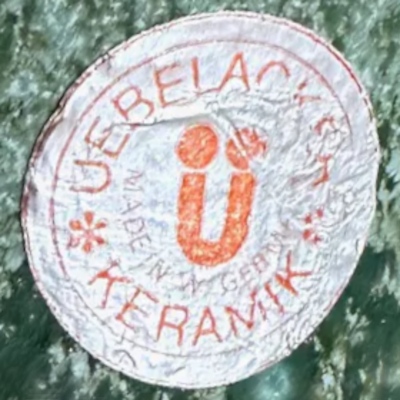
Image 0107-005-03-07
This sticker used from the fading fat lava period (1978) until German reunification (October 1989) includes "Made in W.-Germany".